
You are selling to sponsors before you have anything to sell
A product company receives a sponsorship deck from an event organizer. The deck covers session formats, booth dimensions, expected attendance, and logo placement options. The product company’s first question is whether their customers will be in the room. The deck does not answer that. Most decks can’t. That gap is a symptom of how commercial events in the web, WordPress, CMS, and cloud space have been structured for years, and why that structure is quietly making the economics worse for everyone involved.
Sponsors Are Not Your First Customer. They Just Pay First.
Event organizers face the same pressure every cycle. Revenue has to be committed early. That means sponsor sales begin before the program is finalised, before the audience is confirmed, and sometimes before the concept is fully defined. Most organizers accept this as a fixed constraint and build their sales motion around it.
The consequence is that the program ends up shaped around what sponsors want to buy, not what the agency audience needs to attend for. Agencies notice this. When the content track reads like a product showcase and the headline speakers represent vendor interests, the agency owner’s calculation shifts. The event becomes something to send a junior person to, not something worth blocking two days for. Attendance quality drops. Sponsors notice and lose interest. The revenue problem the organizer was trying to solve by selling sponsorship early gets harder to solve, not easier.
The model is designed to solve a short-term cash flow problem. It creates a longer-term commercial one.
The Audience Is the Product. Everything Else Follows From That
If a product company knows that a specific profile of agency, one with a real budget and an active decision to make, will be in the room, they will pay to reach them. That is not a new idea. It is how effective B2B events in adjacent industries have operated for years. The sponsorship conversation changes entirely when an organizer can describe their audience with precision rather than with a headcount.
The practical implication: the program has to be built for the agency first. Which role is attending? What decision are they working through in the next six to twelve months? What would make two days away from client work commercially justifiable for them? Build around those answers and the sponsor pitch becomes straightforward. The product companies whose customers match that profile will sponsor because the return is legible, not because the booth package looks reasonable.
This applies directly to events like CloudFest and flagship WordCamps. Each has a different audience composition, and the evaluation for a product company considering sponsorship starts there. An organizer who understands that, and can demonstrate it, has a fundamentally different conversation with a potential sponsor than one presenting a logo placement menu.
Audience Quality Is the Baseline Requirement
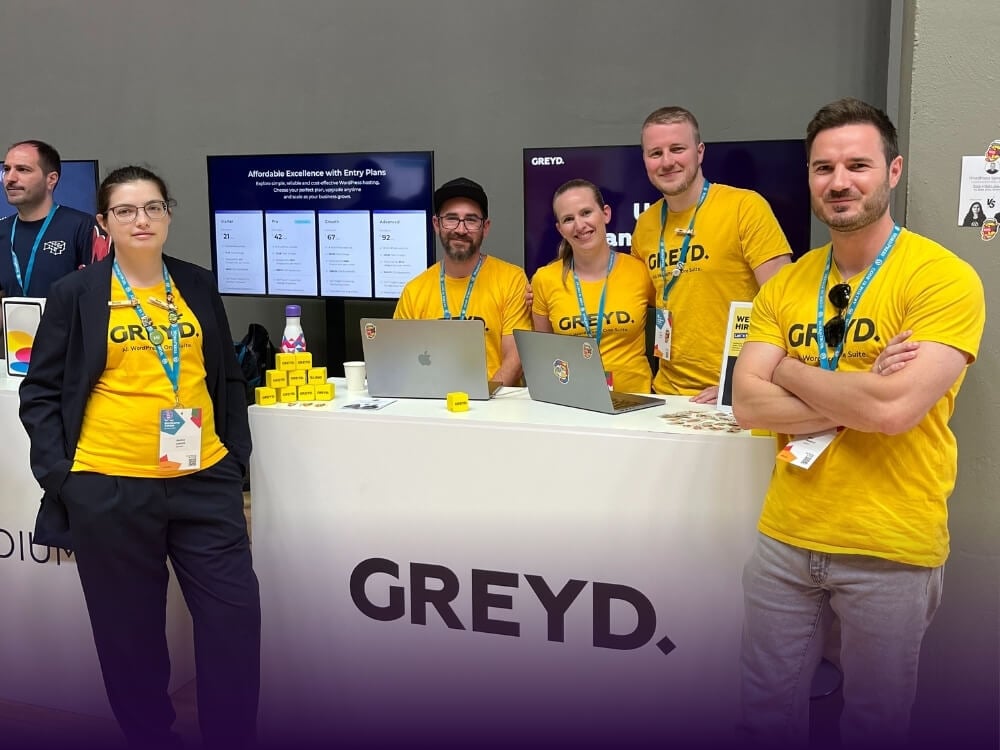
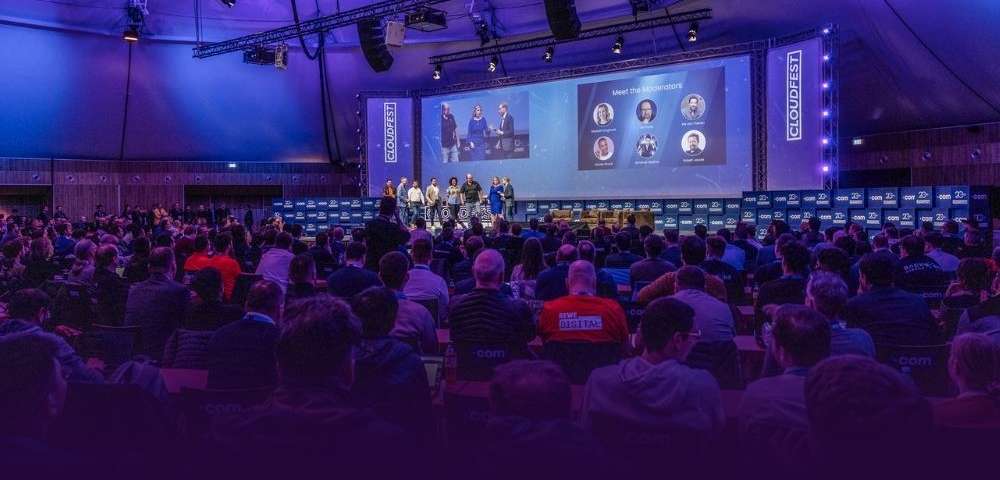
In the past, we have sponsored WordCamps and last month we were a sponsor at the WP Business & Agency Summit at CloudFest. The costs are comparable. The difference in return is not.
At the WP Business & Agency Summit, the attending agencies have been handpicked. The audience is enterprises and mid-sized agencies, which is close to our ICP. We are also given space on stage to speak directly about the product and present case studies. That combination, a matched audience and the ability to have a real product conversation in public, drives qualified traffic to the booth. The contacts made there are ready to buy or close to it.
That is what you want when you book a sponsor booth. It is not a standard outcome, but the result of an event that was built with audience composition as a design decision, not an afterthought.
The Funding problem is real. It is not the reason this does not change
The obvious objection is that sponsors fund the infrastructure. If an organizer waits until the audience is established before approaching sponsors, they have a cash flow problem. The current model is not presented as a choice. It is presented as a constraint.
The constraint is genuine, but the conclusion drawn from it definitely is not. Smaller, well-defined events with a clear audience thesis attract early sponsors more reliably than large general-attendance events with broad demographic claims. An organizer who can say “we are building a two-day program for agency owners working through platform decisions in the next year” has a more specific pitch than one offering booth space at an event that has not yet defined who will walk past it. The cash flow risk does not disappear, but it shifts from “we are hoping enough sponsors commit” to “we have a thesis sponsors can evaluate against their own ICP.” That is a pitch a product company can say yes or no to quickly.
The events that matter commercially in this space in the next few years will be the ones that can answer the sponsor’s first question before they ask it.
Like the WP Business & Agency Summit at CloudFest, organized by Carole Olinger, and PressConf, organized by Raquel Manriquez. The formats are different. The audiences are different. What they share is that both were built around a clearly defined ICP and held to that decision. It is not a coincidence that both events are so successful. Knowing who you are building for, and refusing to dilute it, is not a positioning choice. It is an operational one.